1 Martial Arts Offers Brain Boosting Benefits for All Ages Research Finds Ashleigh Johnstone
Introduction
Being able to attentionally focus on a task, and therefore avert distraction, is fundamental to achieving our goals. Despite its fundamental function in human adaptation to life, information technology is one of the almost vulnerable cognitive functions. This is evidenced past the level of research showing the number of variables that deficits in attending can be attributed to, such as genetics (Durston et al., 2006), mental disease (Clark et al., 2002), and traumatic encephalon injury (Shah et al., 2017), among others. Age has perchance the biggest influence on attentional control with a large amount of research discussing the pass up in this function in older adults (Milham et al., 2002; Kray et al., 2004; Jennings et al., 2007; Deary et al., 2009; Carriere et al., 2010; Dorbath et al., 2011). Deterioration of attentional control is variable just generally progressive, establishing it every bit the best predictor of cerebral dysfunction in older people. In neural terms, attentional command is achieved by the coordinated activation of a number of attentional networks with various specialities depending on the type of command required, although not all of these networks are affected by age in the same mode (Jennings et al., 2007).
Compared to how easily attentional control seemingly declines, little is known almost whether we tin can enhance this function, and if so, how. In this paper, we evaluate the bear upon of Martial Arts experience on three different attentional networks: Warning, Orienting, and Executive. These networks have been neuroanatomically validated and reported every bit being largely independent of 1 another (Fan et al., 2002). The results provided in this paper are of import in aiding understanding of the impact of feel on these networks, whilst as well highlighting potential intervention strategies.
Attentional Control in Martial Arts
Tang and Posner (2009) suggested that there are two different ways to improve attentional control: Attention Grooming (AT, also chosen Network Grooming; Voelker et al., 2017) and Attention State Training (AST). AT comes from Western cultures and is generally based on specific task practice; over the past decade it has become popularized and marketed as 'brain grooming' games (Boot et al., 2008; Bavelier and Davidson, 2013). This means that much research into AT focuses on training participants on a certain chore to improve a specific cognitive skill, all the same these improvements often are not transferable to tasks measuring other skills (Rueda et al., 2005). For example, training at an attentional task will only better the skills required for attentional tasks similar in nature (Thorell et al., 2009). Despite this, improvements are ofttimes constitute in this type of AT research. Participants given training in playing an activeness video game were shown to nowadays an increase in visual attention, in comparison to those given grooming in playing Tetris (Green and Bavelier, 2003). This is perhaps due to the need to stay vigilant whilst also scanning the screen for targets or enemies during this blazon of game. In addition to the improvement non being transferable, this improvement seems to exist short-term, rather than the long-term comeback researchers are striving for Tang and Posner (2009).
On the other mitt, AST is based on Eastern cultures and aims to ameliorate attention through a change in state of mind and body, also challenge to provide a better transference to other tasks not specifically trained by the action (Tang and Posner, 2009). AST can exist found in activities such as yoga, mindfulness, meditation, and Martial Arts. Gothe et al. (2013) used good for you, developed participants to investigate the furnishings of yoga on cognitive control. Participants were asked to visit the laboratory on three occasions to complete some computerized behavioral tasks after a different activity on each 24-hour interval: (1) a xx-min yoga session; (2) a 20-min practise routine on a treadmill; (3) no activity in order to collect baseline data. The social club of the three activities was randomized. A flanker task and an n-dorsum task were used to provide measures of attentional control, and results indicated that the yoga session provided an comeback across both of these tasks. Interestingly, these benefits were not seen afterwards the aerobic practice condition, perchance suggesting that the exercise chemical element of yoga is not the sole force behind the furnishings. Similarly, Moore and Malinowski (2009) plant a correlation between mindfulness experience and improved performance in attention and response inhibition tasks. Even so, unlike the Gothe et al. (2013) experiment, this was a cantankerous-sectional design using the amount of mindfulness feel as a variable rather than results afterward a unmarried session.
Martial Arts includes similar aspects to mindfulness and yoga, and could potentially produce similar improvements in attentional command, although much of the research with Martial Arts has been conducted with school aged children (Diamond and Lee, 2011). For example, during an bookish year, an average of three sessions of Taekwondo per week showed improvements in working retentivity and attention, besides as parentally-reported benefits in concentration and behavioral inhibition (Lakes et al., 2013). Additionally, a recent large-scale review of 84 studies conducted by Diamond and Ling (2016) found that Martial Arts, mindfulness, and Montessori Teaching produced the widest range of benefits in executive control tasks in children when compared with other interventions such as team sports, aerobic exercises, board games, or adaptations to the school curriculum. This review besides raised an important point, noting that the greatest benefits were institute in the children with the lowest starting scores in cognitive tests, and those from lower socio-economical backgrounds. This observation indicates that the greatest benefits from this type of intervention should exist observed in those who display poor cognitive control and that neurotypical populations equanimous of developed immature adults may already be at a ceiling in their attentional performance. Indeed, reports of improved cognitive abilities in younger adults are rare. Near of the benefits take been plant in the sensorymotor system, involving corticospinal excitability due to long term preparation in Karate (Moscatelli et al., 2016b), or in the excitability of the motor cortex in Taekwondo athletes (Moscatelli et al., 2016c). Interestingly, some of these pathways coexist with more cognitive networks, such every bit attentional networks (as reviewed further on), raising the possibility of successfully finding changes in cognition with neurotypical adults despite the lack of previous reports.
Conversely, one would await some improvements in older adults due to the evidence suggesting an age-related decline in cognitive control. Kray et al. (2004) suggested that if cerebral control was plotted on a graph along the lifespan, then information technology would take the shape of an inverted 'U,' with operation improving equally a person ages, remaining relatively stable during early adulthood, and and then declining again as a person grows older. Studies using older populations to investigate the furnishings of Martial Arts on attentional control remain elusive, possibly due to the physical demands the sport requires, however that is not to say that this type of research is impossible. Jansen and Dahmen-Zimmer (2012) recruited participants aged 67–93 to compare the effects of Karate training in comparison to full general physical practice training, and cognitive grooming. This training took place over twenty sessions over 3–6 months, yet despite an increment in well-being reported by those in the Karate training group, there were no significant furnishings on cognitive speed or working memory across any of the groups.
However, it is important to notation that outside laboratories, Martial Artists usually measure out their differences in training in terms of years, rather than weeks or months, so information technology is conceivable that brusque interventions would not attain the country of mind characteristic of the discipline. Witte et al. (2015) built on previous research and studied three unlike groups of participants, with an age range of 63–83. They compared a group training in Karate, with another preparation in fitness and with a passive command grouping that did not complete whatever sports intervention. The results showed that the Karate group displayed small improvements in each of the four tasks performed. In a test of divided attention, for instance, this improvement was non quite significant (p = 0.063) subsequently 5 months merely, afterwards another 5 months of actress preparation, the level of improvement further increased, reaching more than reliable effects (p = 0.002). These results clearly suggest that, at least in adults, potential benefits may need a longer fourth dimension of training to emerge than those normally used in pre–post intervention studies.
To sum up, much of the enquiry into the furnishings of Martial Arts on attentional and cerebral command has used either school-aged children or older adults. At that place appears to exist a lack enquiry focusing on healthy, neurotypical, adult participants. This population seems to need longer periods of preparation to prove whatever improvement in other transference tasks, and this is the gap that nosotros aim to fill up with our current inquiry.
The Attention Network Examination
A limitation of comparing much of the previous research is the wide range of measures used to assess attentional control, potentially leading to inconsistency beyond studies. One fashion to reduce this problem is to avoid using full general measures (such every bit bookish results or IQ) that result in difficulties isolating the core mechanisms behind the benefits. The problem could as well be countered by using tasks which have been validated as measuring specific functions that have been localized to neuroanatomical locations.
Petersen and Posner (2012) discussed recent literature in attentional control and confirmed the being of three cadre networks of attending in the human brain: Alert, Orienting, and Executive (Posner and Petersen, 1990). They suggested that these networks are independent of each other, each having distinct neuroanatomical structures, and responsible for a different aspect of attention. The alert index is related to optimal vigilance, Orienting has associations with the spatial location of targets, and executive has been linked with conflict resolution. Measures of these indexes can be nerveless using the Attention Network Test (ANT; Fan et al., 2002), which utilizes a modified flanker task with four cues types to produce various trial types. The Alert index gives a mensurate of how well a person is able to answer to targets appearing at unpredictable intervals (uncued) compared to a anticipated one (time cued). The Orienting alphabetize assesses how well-participants tin can orient to a target that appears in an unpredictable location (uncued) compared to a certain one (spatially cued). Finally, the executive alphabetize evaluates how well-participants can resolve response conflict in a flanker job, where distractors evoke the same response equally the target (congruent) or the opposite one (incongruent). Behaviorally, all these iii indexes are interpreted as costs, where large differences in RTs or accuracy reflect poor control (Fan et al., 2002; Jennings et al., 2007; Petersen and Posner, 2012).
Functional magnetic resonance imaging (fMRI) has been used to assess the neural activity related to the three attentional networks measured by the ANT. Information technology has been suggested that these iii networks are independent of each other, and while in that location is some overlap, the functional response for each network has a singled-out anatomical location (Fan et al., 2005). The Alert index seems to involve norepinephrine circuits connecting the locus coruleus with the right frontal and parietal cortices. The Orienting alphabetize is generally driven by acetylcholine areas engaging the superior parietal cortex, temporoparietal junction frontal eye fields and superior colliculus. Finally, the Executive network activates dopamine based areas including the inductive cingulate, lateral and ventral prefrontal cortices, and the basal ganglia. When a particular sensory event is presented, it is believed that the coordinated activation of these three networks makes it possible to react to them with fast and authentic responses.
Training in Martial Arts is a wide-reaching experience involving non only a cracking level of motor preparation but also a mental land of concentration and reactivity to targets with a potent social context. Considering of this, information technology is hard to confidently predict where the improvements, if whatsoever, should be observed. There are, however, different aspects of the preparation that could impact directly these indexes. For example, during sparring, Martial Artists need to continuously scan the body of the opponent for an opening where they can score. As this may happen at any item time, preparation in sparring may transfer to other tests involving target detection at random intervals, as measured by the Alert index. In addition to scoring, the Martial Artist needs to avoid and block any incoming hit from the opponent. This requires not merely practiced timing (besides linked to the alert arrangement) but enhanced spatial orienting to the exact location where the hit comes from. Post-obit the example of sparring, Martial Artists also throw feigned punches and kicks to distract the opponent's attention in club to score with an unexpected motility. Non reacting to these in club to meliorate respond to the real ones should crave response disharmonize control of the blazon measured by the Executive index. Of course, it is not just sparring that is involved in Martial Arts training. Equally, these aspects are not exclusive of Martial Arts and tin can exist shared with many other activities such as tennis, fencing, dancing, etc. But they at least stand for a context of repetitive preparation on specific skills that are comparable to those used in AT studies, such every bit brain preparation. With the added element of concentration, meditation, and subject field (as is typical in AST research), information technology provides a promising strategy for training in attentional command.
In this study, we compared 2 groups of participants screened from a wider sample of 500 young adults. One group was equanimous of Martial Artists with at least 2 years of experience while the others had no previous experience with Martial Arts. Because of the requirements of extensive training, assignation to the groups could not exist random, then special intendance was taken during the matching procedure to eliminate the most relevant potential confounds. As there is no previous literature of the influence of dissimilar demographics on Pismire, nosotros previously ran a airplane pilot where these confounds were detected.
The aim of this study was to appraise the functioning of Martial Artists and Non-Martial Artists on the three indexes of attention, as measured past the Emmet. Nosotros hypothesized that smaller indexes, reflecting improved performance, would be observed in the Martial Arts group in comparison to Non-Martial Artists.
Materials and Methods
Participants and Screening Process
An unpublished pilot study using an unbiased random sample of 41 undergraduate students of Psychology at Bangor University was used to examination the ANT in the full general population according to different demographic and lifestyle factors. This pilot showed that Age and Torso Mass Index (BMI) both had meaning effects on Emmet performance, and so based on this nosotros decided to lucifer the Martial Arts and Non-Martial Arts groups mainly on these ii variables amid others.
Using G∗Power 3.0.10, an a priori calculation of optimal sample size was calculated based on parameters taken from the pilot written report. When using stringent criteria such as a correlation of 0.half-dozen between measures, a desired power of 0.95, and an alpha level set to 0.05, it was estimated that a minimum sample size of xxx participants would be needed to accomplish an upshot size of 0.25 from the required 2x2x2 ANOVA (see section "Pattern and Procedure"). This would result in 15 participants in each of the ii participant groups.
A screening questionnaire was introduced and distributed online to over 500 new people including Bangor University undergraduates and not-students from the local customs. These responses then made up a participant pool which was used to create two experimental groups matched on the aforementioned variables: one group with no Martial Arts feel (n = 27, five males), and the second with those who had undertaken Martial Arts practice during the terminal 2 years (due north = 21, six males). The Martial Arts grouping was made up of participants with experience in Karate (five), Taekwondo (three), Kickboxing (iii), Jujitsu (3), Tai Chi (2), Judo (2), Thai Boxing (ii), and Kung Fu (ane). This sample exceeded the minimum sample size estimated by the power adding. The participants from these groups were invited to participate in the Pismire phase. The Non-Martial Arts grouping reported taking part in activities such as going to the gym, playing team sports, meditating, praying, and playing musical instruments.
Students from Bangor University were reimbursed for their time with course credits, and those from the community were given a monetary token of £6. All participants were neurotypical, had normal or corrected to normal vision, and normal hearing. This study gained approval from the Bangor University Ethics and Governance Committee (Ethics Approving #2015-15553) and have been performed in accord with the ethical standards laid down in the 1964 Annunciation of Helsinki and its later amendments. Equally a condition of this approval, all participants provided fully informed consent prior to taking function. Information regarding the demographics of the selected participants tin can be found in Table 1.

TABLE 1. Descriptive information for key participant demographics.
Stimuli and Apparatus
This experiment was presented using EPrime ii.0 [Psychology Software Tools (PST)]. Responses were recorded using a QWERTY keyboard, with the 'C' and 'Yard' keys as the response keys. Target stimuli consisted of a row of five black arrows on a white background, facing to either the left or right side of the screen; each arrow subtended 0.53° of a visual bending, with a gap of 0.09°. The complete series of arrows subtended two.73°. Participants were required to press the left key (C) or the correct primal (Grand) in response to the direction of the primal arrow. This could be in either a congruent position (facing the aforementioned way) to the other arrows, or in an incongruent one (facing the opposite way). These were displayed either 0.71° of a visual angle above or below a fixation cross in the center of the screen (see Figure 1).

FIGURE ane. Diagram showing (A) all possible cue types, (B) the target types, and (C) trial timings and procedure.
The target stimulus was preceded by ane of four cue configurations (Figure 1): no cue, eye cue, double cue, and spatial cue. Each cue was fabricated upwardly of a blackness asterisk the same size as the fixation cross (0.44° of a visual angle tall; 0.44° wide) and appeared for 100 ms before the target (Figure 1). During the no cue status, an asterisk did not appear, instead, the fixation cantankerous remained on screen. For the center cue conditions, the asterisk simply replaced the fixation cross. Double cue conditions consisted of an asterisk appearing both above and beneath the fixation cross. Finally, during spatial cue conditions, the asterisk appeared either above or beneath the fixation cross, and always provided a true indication of the location in which the target would appear.
Each trial began with a fixation cross presented during variable intervals (400–1600 ms) and ended with another fixation cantankerous appearing only afterwards the response to the target also with a variable duration to brand the total interval time 1600 ms per trial. After the outset interval, the cue appeared on screen for 100 ms, followed past another fixation cantankerous for a fixed duration of 400 ms. The target and then appeared and remained on screen until the participant responded, or until 1700 ms had passed. Responses exceeding this limit were recorded every bit errors.
Design and Procedure
The study took a 2 (participant group) × 2 (trial type) × 2 design (target congruency – executive) design. For the Alert index this would look similar 2 (Martial Arts vs. Non-Martial Arts) × 2 (no cue vs. double cue) × ii (congruent target vs. incongruent target). Whereas for Orienting it would take the form of 2 (Martial Arts vs. Non-Martial Arts) × two (heart cue vs. spatial cues) × 2 (congruent target vs. incongruent target). The Alert and Orienting networks come from cue manipulations, and are contained due to them using different trial types in their calculations, however the Executive network comes from a target manipulation and is therefore not contained of the Alert and Orienting networks. As a result, nosotros will analyze this as an interaction.
Upon arrival in the laboratory, participants were provided with information about the experiment, given the opportunity to inquire questions, and provided with a consent form. Later receiving fully informed consent, participants were presented with the demographics questionnaire, earlier being asked to complete the ANT by responding to the direction of a central arrow as described earlier.
A exercise cake of 24 trials was presented to participants to ensure all instructions were understood; no feedback was provided. Once completed, participants moved onto the experimental block of 128 trials, earlier having a break of a length determined by the participant, which was then followed by some other 128 trials. Again, no feedback was provided.
Data Analysis
All information was pre-processed within EPrime 2.0 (PST). Incorrect trials were removed from the assay, every bit were those with a response time greater than one thousand ms. Once the filtering in EPrime was complete, the data was moved over to SPSS v.22 for statistical assay, and split into the 2 participant groups based on the criteria mentioned in a higher place for Martial Arts experience. The significance level was set at p ≤ 0.05. Descriptive statistics are presented every bit mean averages, ± standard deviation for continuous variables, and frequencies for categorical variables (run into Tabular array 1). Differences between the groups were estimated using independent samples t-tests, whilst differences in frequencies were assessed using chi square. The three indexes, Alert, Orienting, and Executive, were then created using the calculations described by Fan et al. (2002). These are expressed equally mean price indexes. Mean RT averages per participant, per status were analyzed through 3 different full general linear models (see Table 2). Effect sizes for these effects are estimated through fractional eta squared. When Martial Arts group differences were found, correlations were conducted with years of experience using the Pearson'southward coefficient.
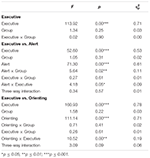
TABLE 2. F-values, probability values (p) and effect sizes (), for all conducted general linear models.
Results
Data were separately analyzed for each of the attentional indexes.
Executive
When the Executive index was analyzed in isolation, we plant an overall increase of 36 ms for incongruent trials compared to coinciding ones [F(1,46) = 1013.92; p < 0.001; = 0.1]. This effect was almost identical for the Martial Arts grouping (36 ms) compared to the Not-Martial Arts one (35 ms, F < i) (see Figure 2).

Figure two. Graph depicting the mean price for each of the 3 attentional network, for both participant groups. Error bars stand for Standard Mistake. ∗ p < 0.05.
Executive vs. Alert
Mean RTs per participant per condition were submitted to a mixed factor analysis of variance (ANOVA) with the Martial/Non-Martial Arts variable as a grouping factor and the Type of Cue (Double Cue, no Cue) and Congruency (Congruent, Incongruent) equally repeated measures. Results indicated no overall differences in RTs beyond the groups (p = 0.31). Responses to targets preceded past the double cue were 32 ms faster than those without a cue as would be expected as a measure of Alert. More importantly, this benefit from the double cue was 18 ms smaller in the Martial Arts group compared to the Not-Martial arts group [F(1,46) = 5.64; p = 0.022; = 0.642] (see Effigy 2). Although grouping differences did not reach significance in whatever of the weather condition, Non-Martial Artists were constitute to be particularly slower than the Martial Artists when no cue was presented (24 ms), while both groups seemed more similar with the double cue (6 ms) (come across Figure 3). Congruent trials were overall 32 ms faster than incongruent ones [F(1,46) = 52.59; p < 0.001; = 0.1], only this effect did not change with the group (F < 1). Interestingly, the executive congruency furnishings were more axiomatic in the double cue trials (38 ms) than with no cue (27 ms) [F(1,46) = 4.18; p = 0.047; = 0.516]; but this was found in general for all participants and did not modify across the groups (p = 0.57).

FIGURE 3. Graph depicting the mean RT for the trial types that make upwards the Alert index, no cue trials and double cue trials. Hateful RTs are displayed for both participant groups. Error bars represent Standard Fault. ∗ p < 0.05.
Executive vs. Orienting
Mean RTs per participant per condition were also submitted to a mixed factor assay of variance (ANOVA) with the Martial/Non-Martial Arts variable equally a grouping factor and the Type of Cue (Spatial, Center Cue) and Congruency (Congruent, Incongruent) as repeated measures. As before, no overall differences were found between the Martial Arts and the Not-Martial Arts groups (p = 0.22) (see Figure ii). Congruent trials were constitute to be 38 ms faster than the incongruent ones [F(1,46) = 160.93; p < 0.0001; = 1]. Also, spatial cues produced responses that were 41 ms faster than the unmarried central cue [F(1,46) = 111.xiv; p < 0.0001; = 1]. Interestingly, the congruency furnishings changed depending on the type of spatial cueing [F(1,46) = 10.52; p = 0.002; = 0.89], with a flanker congruency effect of 47 ms in the heart cue condition congruent trials that was reduced to 29 ms with the spatial cue.
Attentional Networks Correlations
Nosotros analyzed whether at that place were any interactions across attentional networks by calculating the correlations across the three indexes. Results demonstrated a marginally significant correlation between the Alert and Executive indexes merely (r = -0.262; p = 0.072).
A correlation was also done on the three indexes of attention and the number of years of Martial Arts practice. No significant correlation between Orienting and number of years was found, r = 0.121, northward = 46, p = 0.421, nor betwixt Executive and number of years, r = 0.039, n = 46, p = 0.798. However, a correlation nearing significance was found between the Alarm alphabetize and the number of years of practice, r = -0.274, due north = 46, p = 0.065.
Accuracy
Finally, a series of analyses were run on the accuracy of responses to each trial type. For each participant, a percentage (%) accuracy score was calculated for each type of trial (cue blazon and congruency type), and these were then compared between groups. There were no significant differences between the two participant groups for any trial type for the ANT, suggesting that all trials were equally as hard. Less than 16% of overall responses were recorded every bit errors.
Word
In this paper, we provide evidence that preparation in Martial Arts is associated with improvements in the Alert attentional network. This appears to be a specific benefit that boosts endogenous preparation for uncertain targets, every bit suggested by the increased benefits in the uncued conditions in comparison to a lack of improvement in the cued conditions. This means that when an upcoming target had no cue, the Martial Artists performed at a higher level, still when the target had a reliable cue, these group differences disappeared. Importantly, the Alert benefits observed in the MA group was farther supported by the negative correlation found between the Alert index and the number of years of training.
The employ of ANT allows us to speculate on the nature of these benefits, as explained in the introduction. Previous inquiry with this task using neuroimaging techniques institute that the Alarm index is linked to the activation of a norepinephrine based network connecting the locus coeruleus with the right frontal and parietal cortices, also as the inductive cingulate cortex (ACC) and orbitofrontal cortex (OFC; Nieuwenhuis et al., 2005; Raz and Buhle, 2006; Petersen and Posner, 2012). The locus coeruleus is a nucleus in the brainstem in charge of producing norepinephrine, which has an excitatory issue on the residue of the brain, resulting in an increased level of arousal. As a result of this activation, different parts of the encephalon involved in perceptual and motor processing go primed to enable faster responses to stimuli (Moscatelli et al., 2016a,b; Monda et al., 2017).
It is not yet clear which attribute of Martial Arts training may be driving the effect on the warning index, or indeed where the upshot is coming from. Farther work using neuroimaging techniques may permit us to proceeds an insight into these details. For example, Fan and Posner (2004) suggested the utilise of diffusion tensor imaging (DTI) to look at the attentional networks' functional connectivity; past agreement how these circuits work in a typical group of participants, we could then begin to investigate whether Martial Arts feel has any consequence, which would then exist able to show united states where the effect on alert is observed at a neural level. Of course, information technology is conceivable that Martial Artists who trained for years on fast reactions to stimuli may accept modeled their brains to lower the activation threshold of areas involved in perceptual processing and motor control (Moscatelli et al., 2016c). However, we would expect this influence to appear across all weather, for both predictable and unpredictable targets, only inducing faster reaction times, rather than any sectional benefits. This idea is non supported by the results which suggested no significant differences in overall RTs in the Martial Arts group in comparison to the Non-Martial Arts controls.
An interesting aspect of our results is that the strongest benefits seem to announced more specifically in the unpredictable status. Somehow, our Martial Artists seem to be more than capable of inducing these increases in arousal to improve sensorimotor processing endogenously without the help of external cues. Indeed, there is evidence that endogenous time allocation of attention to the detail moment when a target appears improves identification of masked targets that otherwise would have been unconsciously processed (Naccache et al., 2002). More than chiefly, it has also been found that identifications were better for targets closer to the expected time frame than for more distant ones in fourth dimension. When this is considered in relation to our findings, it raises the possibility that Martial Artists may endogenously hold the level of vigilance for longer periods of fourth dimension reaching the unpredictable target in a more efficient manner than controls.
This estimation is supported by recent findings of increased excitability of the corticospinal motor system in Karate athletes (Moscatelli et al., 2016a,b; Monda et al., 2017). In this study, the authors found that this greater excitability from the Karate grouping was evidenced in faster reaction times to targets actualization in variable intervals (as is standard in the Reaction Time [RTI] test from the Cambridge Neuropsychological Test Automatic Battery [CANTAB®]). Related findings from this team have too found excitability of the motor cortex in Taekwondo athletes (Moscatelli et al., 2016c), suggesting that this upshot may be constitute in other types of Martial Arts. In the current study, when the target appeared in a predictable interval, no group differences were found. Our Martial Arts group were faster than the Not-Martial Arts group but with unpredictable targets, thereby supporting Moscatelli colleagues findings. Interestingly this RTI task was besides described equally a vigilance task. Our results can be seen as a step forrard, further suggesting that the excitability of this corticospinal motor organisation may exist linked to the improved activity in the Alert network due to Martial Arts do.
Although previous research seems to assume that the three attentional networks studied hither largely independent, at that place is some evidence of influences across them. For instance, spatial orienting seems to have a cardinal role in the activation of competing responses during a flanker job in what it would seem similar a modulation of the Orienting network over the Executive i (Vivas and Fuentes, 2001). Likewise, when testing neglect patients, increased alert can exist used to improve target detection in the hemifield contralateral to the site of the lesion (Robertson et al., 1995), demonstrating an influence of the Alert network over the Orienting one. In our data, we did not find whatsoever correlation betwixt Alert and Orienting, neither Orienting with Executive. Even so, we did detect a strong correlation between Alert and Executive, since greater congruency furnishings were found in the predictable condition. Further support may come from studies finding that increases in norepinephrine improve executive response option (Chamberlain et al., 2006). This also fits well with results described earlier in which response congruency effects were only found at the spatially cued location (Vivas and Fuentes, 2001). Basically, the executive resolution of conflict arm-twist by incongruent flankers requires first the selection of the target, both spatially and temporally. Although this is an interesting attribute of the information, it yet did not modify with the group, not being affected by training in Martial Arts.
The benefits associated with MA preparation in our report seem to be exclusive to the Alert arrangement, mostly with regards to endogenous alert. Chiefly, this improvement increases with years of practice extending up to 18 years. These results are important considering it highlights the potential difficulties of getting significant results from studies of using randomized groups with a training intervention of just a few months. Yet, 1 of the biggest disadvantages of using cross-sectional samples is the lack of control of group variables. In order to ameliorate the control over the current report, participants were advisedly matched on various variables. To find two homogeneous participant groups, demographic information for over 500 people was collected and so filtered based on age, BMI, lifestyle, and health factors such as smoking condition, and level of educational activity. To avoid ending up with an active participant group and a passive participant group, we ensured that control participants were only recruited if they reported taking part in several hours of activeness per week. The activities reported included gym time, football, and basketball game among others, suggesting that the command participants were just as agile every bit the Martial Artists. We believe that this is an important variable to employ with regards to matching the groups to ensure a like level of fitness due to previous research suggesting a link between fitness and cognitive control. Our estimation, however, has been based on a non-validated cocky-report measure so should be considered with caution. In whatsoever case, the descriptive data showed no significant differences in terms of hours of participating in other activities per week betwixt the two groups.
A further consideration comes from the heterogeneity of participants in the Martial Arts grouping, specifically in relation to the styles of Martial Arts. In the current paper, dissimilar styles of Martial Arts with variations in both training and philosophy are used. This was done under the assumption that all of them would incorporate elements of physical and mental training in line with Tang and Posner (2009) AST classification, found to cause improvements in executive control (Moore and Malinowski, 2009; Gothe et al., 2013). Still, Weiser et al. (1995) suggested that Martial Arts be on a continuum with more meditative styles on one end, and more antagonistic styles on the other. This suggests that information technology may be important to consider potential differences in style in various forms of Martial Arts. Farther inquiry intends to assess these possible differences, in the hope that it could lead to a greater agreement of the underlying drivers behind the cognitive improvements associated with Martial Arts.
The current research suggests that the alert network of attention differs between people with Martial Arts experience and those without this feel. Whilst this result was merely found in 1 of the three known attentional networks, it supports previous work which suggests changes in control equally a issue of taking role in Martial Arts, whilst also extending the enquiry field into populations of neurotypical adults. Farther research should seek to replicate this finding, and discover the underlying reasons for the event solely actualization in the Alert network and non Orienting or Executive. This may help improve our understanding of how activeness in dissimilar attentional networks can be 'trainable' or able to be improved through Martial Arts.
Data Availability
The datasets analyzed during the electric current written report are available from the respective author on reasonable asking.
Writer Contributions
AJ and PM-B every bit contributed to the development, data collection, analysis and estimation, and manuscript write- up of this research.
Funding
This enquiry was funded by the Economic and Social Research Council Doctoral Training Center (ESRC DTC) from United Kingdom, grant number ES/J500197/1.
Conflict of Interest Argument
The authors declare that the enquiry was conducted in the absenteeism of any commercial or fiscal relationships that could be construed as a potential disharmonize of interest.
The reviewer DG and handling Editor declared their shared affiliation.
Acknowledgments
The authors would like to thank Alexander Kelly and Lauren Green for their assistance collecting information. They would also similar to thank the reviewers for their insightful comments on the manuscript.
References
Kick, W. R., Kramer, A. F., Simons, D. J., Fabiani, M., and Gratton, K. (2008). The effects of video game playing on attention, memory, and executive control. Acta Psychol. 129, 387–398. doi: 10.1016/j.actpsy.2008.09.005
PubMed Abstract | CrossRef Full Text | Google Scholar
Chamberlain, S. R., Müller, U., Blackwell, A. D., Clark, L., Robbins, T. W., and Sahakian, B. J. (2006). Neurochemical modulation of response inhibition and probabilistic learning in humans. Science 311, 861–863. doi: x.1126/scientific discipline.1121218
PubMed Abstract | CrossRef Full Text | Google Scholar
Clark, 50., Iversen, South. D., and Goodwin, G. 1000. (2002). Sustained attention arrears in bipolar disorder. Br. J. Psychiatry 180, 313–319. doi: ten.1192/bjp.180.4.313
CrossRef Full Text | Google Scholar
Deary, I. J., Corley, J., Gow, A. J., Harris, South. Due east., Houlihan, 50. M., Marioni, R. E., et al. (2009). Age-associated cerebral decline. Br. Med. Bull. 92, 135–152. doi: x.1093/bmb/ldp033
PubMed Abstract | CrossRef Full Text | Google Scholar
Diamond, A., and Ling, D. S. (2016). Conclusions about interventions, programs, and approaches for improving executive functions that announced justified and those that, despite much hype, do not. Dev. Cogn. Neurosci. eighteen, 34–48. doi: ten.1016/j.dcn.2015.11.005
PubMed Abstruse | CrossRef Full Text | Google Scholar
Durston, S., Mulder, M., Casey, B. J., Ziermans, T., and van Engeland, H. (2006). Activation in ventral prefrontal cortex is sensitive to genetic vulnerability for attention-deficit hyperactivity disorder. Biol. Psychiatry threescore, 1062–1070. doi: ten.1016/j.biopsych.2005.12.020
PubMed Abstract | CrossRef Full Text | Google Scholar
Fan, J., McCandliss, B. D., Fossella, J., Flombaum, J. I., and Posner, Thousand. I. (2005). The activation of attentional networks. Neuroimage 26, 471–479. doi: ten.1016/j.neuroimage.2005.02.004
PubMed Abstract | CrossRef Full Text | Google Scholar
Fan, J., McCandliss, B. D., Sommer, T., Raz, A., and Posner, K. I. (2002). Testing the efficiency and independence of attentional networks. J. Cogn. Neurosci. 14, 340–347. doi: 10.1162/089892902317361886
PubMed Abstract | CrossRef Full Text | Google Scholar
Gothe, Northward., Pontifex, M. B., Hillman, C., and McAuley, E. (2013). The astute effects of yoga on executive office. J. Phys. Act. Health ten, 488–495. doi: 10.1123/jpah.10.4.488
CrossRef Full Text | Google Scholar
Jansen, P., and Dahmen-Zimmer, K. (2012). Effects of cerebral, motor, and karate training on cerebral functioning and emotional well-being of elderly people. Forepart. Psychol. 3:twoscore. doi: 10.3389/fpsyg.2012.00040
PubMed Abstract | CrossRef Full Text | Google Scholar
Jennings, J. M., Dagenbach, D., Engle, C. M., and Funke, L. J. (2007). Age-related changes and the attention network task: an test of alerting, orienting, and executive office. Neuropsychol. Dev. Cogn. B Crumbling Neuropsychol. Cogn. 14, 353–369. doi: 10.1080/13825580600788837
PubMed Abstract | CrossRef Total Text | Google Scholar
Kray, J., Eber, J., and Lindenberger, U. (2004). Historic period differences in executive functioning across the lifespan: the role of verbalization in chore preparation. Acta Psychol. 115, 143–165. doi: ten.1016/j.actpsy.2003.12.001
PubMed Abstract | CrossRef Full Text | Google Scholar
Lakes, K. D., Bryars, T., Sirisinahal, Due south., Salim, N., Arastoo, S., Emmerson, N., et al. (2013). The healthy for life taekwondo pilot report: a preliminary evaluation of furnishings on executive function and BMI, feasibility, and acceptability. Ment. Wellness Phys. Act. 6, 181–188. doi: 10.1016/j.mhpa.2013.07.002
PubMed Abstract | CrossRef Full Text | Google Scholar
Milham, M. P., Erickson, Thousand. I., Banich, M. T., Kramer, A. F., Webb, A., Wszalek, T., et al. (2002). Attentional command in the crumbling brain: insights from an fMRI study of the stroop task. Encephalon Cogn. 49, 277–296. doi: 10.1006/brcg.2001.1501
PubMed Abstract | CrossRef Total Text | Google Scholar
Monda, Five., Valenzano, A., Moscatelli, F., Salerno, M., Sessa, F., Triggiani, A. I., et al. (2017). Primary motor cortex excitability in karate athletes: a transcranial magnetic stimulation written report. Front. Physiol. eight:695. doi: 10.3389/fphys.2017.00695
CrossRef Total Text | Google Scholar
Moscatelli, F., Messina, G., Valenzano, A., Monda, V., Viggiano, A., Messina, A., et al. (2016a). Functional cess of corticospinal system excitability in karate athletes. PLOS ONE eleven:e0155998. doi: 10.1371/journal.pone.0155998
PubMed Abstruse | CrossRef Full Text | Google Scholar
Moscatelli, F., Messina, 1000., Valenzano, A., Petito, A., Triggiani, A. I., Messina, A., et al. (2016b). Differences in corticospinal system activeness and reaction response between karate athletes and not-athletes. Neurol. Sci. 37, 1947–1953.
PubMed Abstract | Google Scholar
Moscatelli, F., Valenzano, A., Petito, A., Triggiani, A. I., Ciliberti, M. A. P., Luongo, Fifty., et al. (2016c). Human relationship between blood lactate and cortical excitability between taekwondo athletes and non-athletes after hand-grip exercise. Somatosen. Motor Res. 33, 137–144. doi: 10.1080/08990220.2016.1203305
PubMed Abstract | CrossRef Full Text | Google Scholar
Nieuwenhuis, S., Aston-Jones, G., and Cohen, J. D. (2005). Determination making, the P3, and the locus coeruleus-norepinephrine arrangement. Psychol. Bull. 131, 510–532. doi: 10.1037/0033-2909.131.4.510
PubMed Abstract | CrossRef Full Text | Google Scholar
Posner, M. I., and Petersen, S. Eastward. (1990). The attention organisation of the homo brain. Annu. Rev. Neurosci. 13, 25–42. doi: 10.1146/annurev.ne.13.030190.000325
CrossRef Full Text | Google Scholar
Robertson, I. H., Tegnér, R., Tham, K., Lo, A., and Nimmo-Smith, I. (1995). Sustained attention training for unilateral neglect: theoretical and rehabilitation implications. J. Clin. Exp. Neuropsychol. 17, 416–430. doi: x.1080/01688639508405133
PubMed Abstract | CrossRef Full Text | Google Scholar
Rueda, 1000. R., Rothbart, M. Thousand., McCandliss, B. D., Saccomanno, L., and Posner, Thousand. I. (2005). Preparation, maturation, and genetic influences on the development of executive attending. Proc. Natl. Acad. Sci. UsaA. 102, 14931–14936. doi: 10.1073/pnas.0506897102
PubMed Abstract | CrossRef Total Text | Google Scholar
Shah, S. A., Goldin, Y., Conte, Grand. M., Goldfine, A. 1000., Mohamadpour, 1000., Fidali, B. C., et al. (2017). Executive attention deficits after traumatic brain injury reflect impaired recruitment of resource. Neuroimage 14, 233–241. doi: 10.1016/j.nicl.2017.01.010
PubMed Abstract | CrossRef Full Text | Google Scholar
Thorell, L. B., Lindqvist, South., Bergman Nutley, S., Bohlin, Yard., and Klingberg, T. (2009). Grooming and transfer furnishings of executive functions in preschool children. Dev. Sci. 12, 106–113. doi: ten.1111/j.1467-7687.2008.00745.ten
PubMed Abstract | CrossRef Full Text | Google Scholar
Vivas, A. B., and Fuentes, L. J. (2001). Stroop interference is afflicted in inhibition of return. Psychon. Bull. Rev. viii, 315–323. doi: 10.3758/bf03196167
CrossRef Full Text | Google Scholar
Voelker, P., Piscopo, D., Weible, A. P., Lynch, G., Rothbart, Thou. One thousand., Posner, M. I., et al. (2017). How changes in white thing might underlie improved reaction time due to practice. Cogn. Neurosci. 8, 112–118. doi: 10.1080/17588928.2016.1173664
PubMed Abstract | CrossRef Full Text | Google Scholar
Weiser, 1000., Kutz, I., Kutz, S. J., and Weiser, D. (1995). Psychotherapeutic aspects of the martial arts. Am. J. Psychother. 49, 118–127.
PubMed Abstruse | Google Scholar
Witte, K., Kropf, S., Darius, Southward., Emmermacher, P., and Böckelmann, I. (2015). Comparing the effectiveness of karate and fitness training on cognitive operation in older adults — a randomized controlled trial. J. Sport Wellness Sci. 5, 484–490. doi: 10.1016/j.jshs.2015.09.006
CrossRef Full Text | Google Scholar
Source: https://www.frontiersin.org/articles/10.3389/fpsyg.2018.00080/full
0 Response to "1 Martial Arts Offers Brain Boosting Benefits for All Ages Research Finds Ashleigh Johnstone"
Post a Comment